Understanding Bharatanatyam Levels | Nrithya Digital Gurukulam
Three Levels in Bharatanatyam According to the Natya Shastra
Bharatanatyam is one of India’s oldest and most graceful classical dance forms. Every movement, posture, and expression in this art form is rooted in ancient theory and tradition. The foundation of Bharatanatyam can be traced back to the Natya Shastra, the monumental treatise on performing arts written by Bharata Muni more than two thousand years ago.
Let’s explore these three important levels and how they are used in Bharatanatyam.
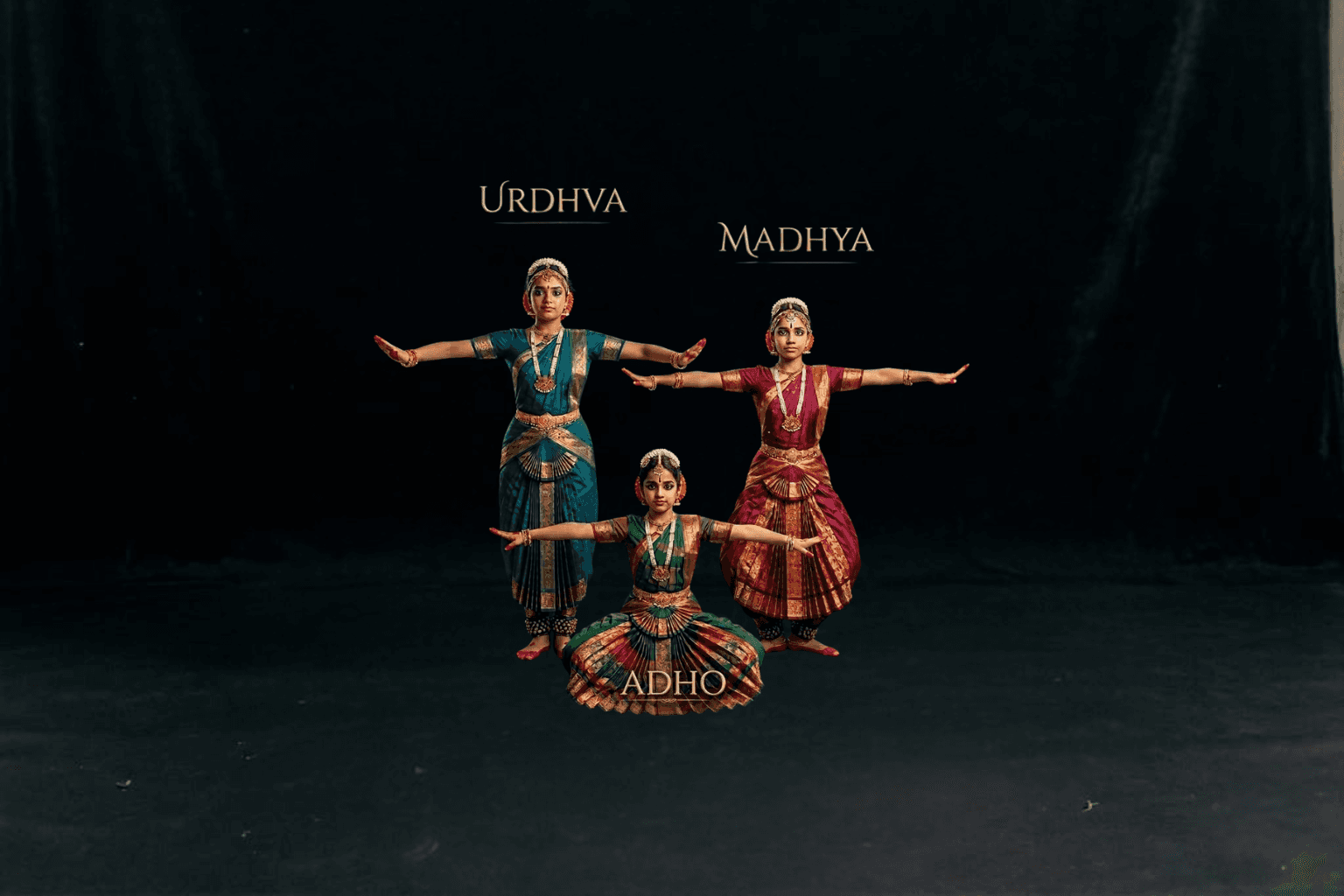
1. Upper Level (Sama / Urdhva)
The upper level refers to movements performed in an upright standing posture. In this position, the dancer maintains a straight spine and balanced stance, creating an elegant and composed appearance.
This level is often used to portray grace, dignity, and calmness. Characters such as gods, royalty, or divine figures are frequently depicted in this posture because it conveys poise and authority.
Common examples include:
Samapada Sthana, where the feet are placed together in a neutral stance.
Gentle walking movements used in stage entry or transitions.
Because the body remains tall and open, this level gives the dancer a majestic presence on stage.
2. Middle Level (Madhya)
The middle level is the most frequently used level in Bharatanatyam. It involves a semi-sitting posture with partially bent knees, commonly known as Araimandi.
Araimandi is considered the signature stance of Bharatanatyam, providing both stability and beauty to the dancer’s movements. Most adavus (basic dance steps) are practiced and performed in this position.
This level allows dancers to:
Execute rhythmic footwork
Maintain balance during complex movements
Create dynamic shapes with the body
Because of its versatility, the middle level forms the core foundation of Bharatanatyam technique.
3. Lower Level (Adho)
The lower level involves movements performed close to the ground in a deep sitting position. This is often referred to as Muzhumandi in Bharatanatyam.
This posture requires strength, flexibility, and control, as the dancer bends deeply at the knees and lowers the body closer to the floor.
The lower level is often used to create:
Powerful dramatic moments
Devotional expressions
Visually striking choreography
Since it demands strong thigh muscles and precise balance, dancers usually incorporate this level sparingly to highlight important moments in a performance.
Nrithya Digital Gurukulam is helping students learn these traditional concepts through structured training and online dance classes. By combining ancient knowledge from the Natya Shastra with modern teaching methods, students across the world can experience the beauty and discipline of Bharatanatyam.