Vrittis in Bharatanatyam | Online Bharatanatyam Classes
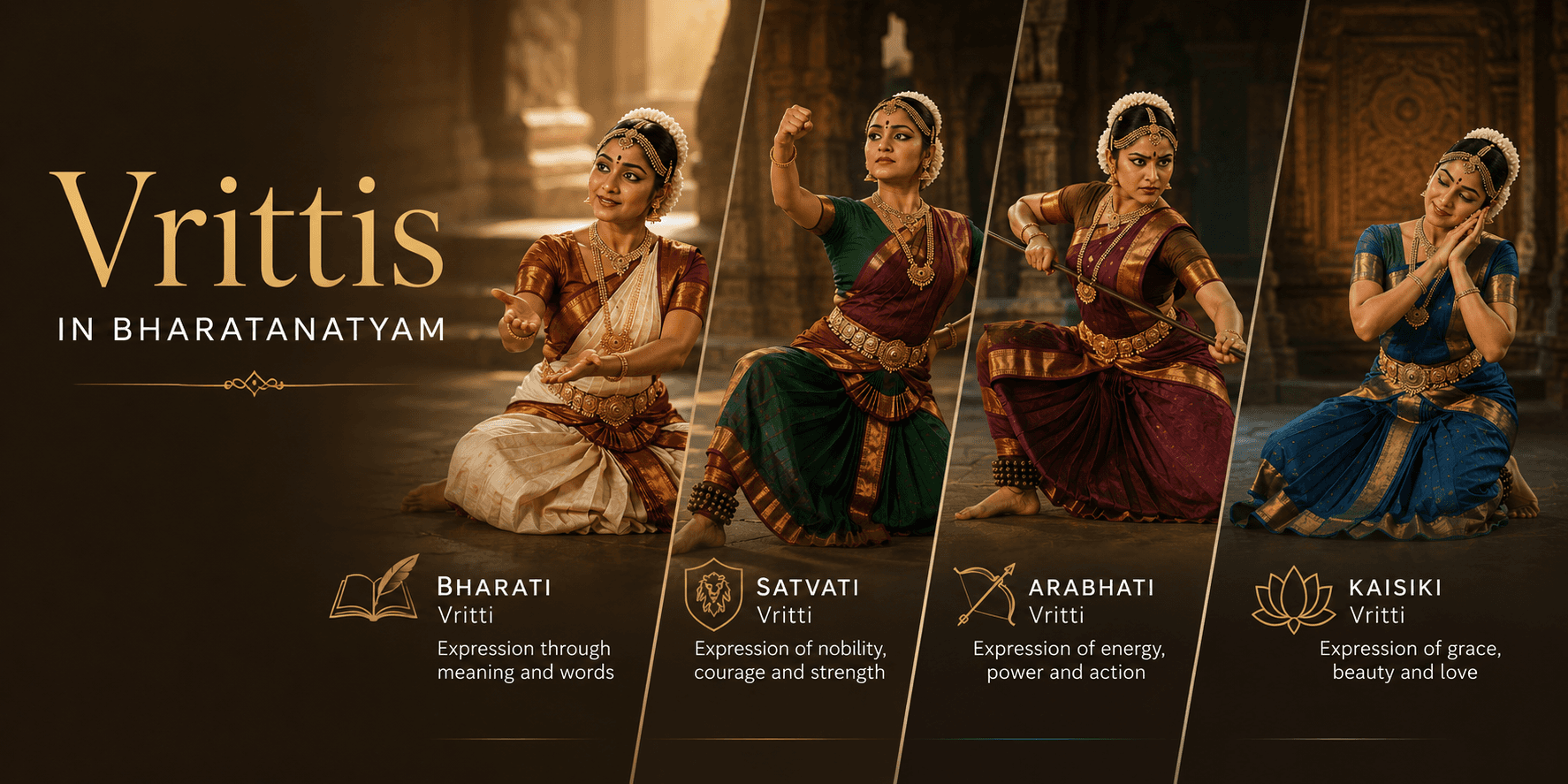
What Are Vrittis?
Vrittis are the different modes of expression used by performers to communicate with the audience. They influence how a dancer presents a character, emotion, or story.
The Natya Shastra describes four main Vrittis:
1. Bharati Vritti – Expression Through Meaning
Bharati Vritti focuses on communication and understanding the meaning of the lyrics. In Bharatanatyam, it is seen when dancers use abhinaya to convey stories, poetry, and devotional compositions.
2. Satvati Vritti – Nobility and Strength
Satvati Vritti represents courage, dignity, and inner strength. It is often used to portray divine characters, heroes, and devoted saints.
3. Arabhati Vritti – Energy and Power
Arabhati Vritti is dynamic and forceful. It appears in scenes of battle, victory, and heroic action. Strong movements and powerful stage presence are its defining features.
4. Kaisiki Vritti – Grace and Beauty
Kaisiki Vritti is known for elegance, charm, and delicate expression. It is commonly seen in padams, javalis, and devotional pieces that explore love and devotion.
Why Are Vrittis Important?
The four Vrittis help dancers:
Improve storytelling skills
Understand different emotions and characters
Perform with greater depth and authenticity
Connect better with the audience
The four Vrittis—Bharati, Satvati, Arabhati, and Kaisiki—form an important part of Bharatanatyam's artistic foundation. By understanding these styles, dancers can bring greater meaning, expression, and versatility to their performances, making their journey in Bharatanatyam more enriching and rewarding.
At Nrithya Digital Gurukulam, we believe that learning Bharatanatyam goes beyond mastering adavus and choreography. Our online Bharatanatyam classes help students connect with the rich philosophy and aesthetics of this classical art form.