Navarasas: The Nine Emotions in Bharatanatyam
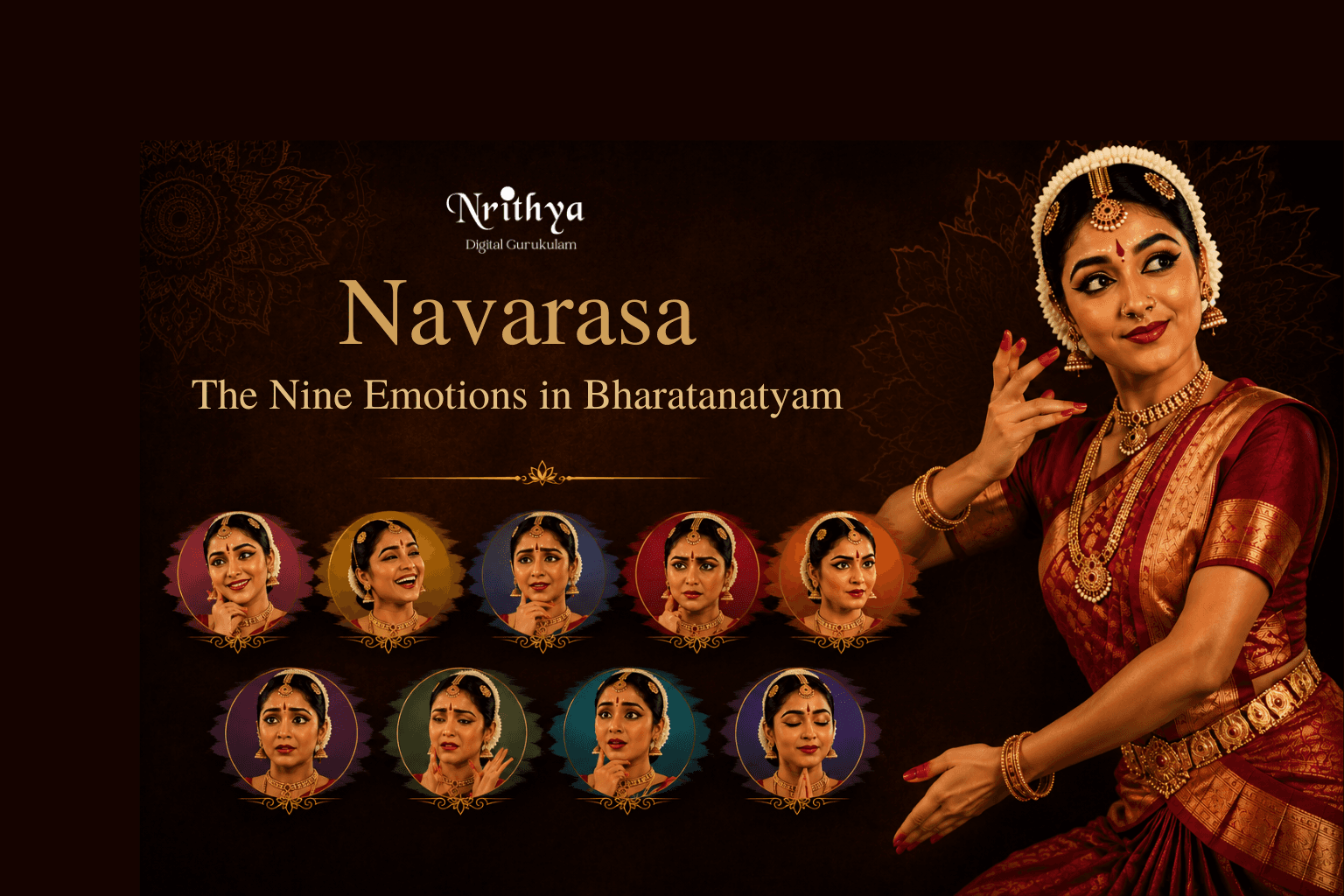
Bharatanatyam is not just a dance form — it is a powerful language of emotion and storytelling. At the heart of this expression lies the concept of Navarasas, the nine classical emotions that bring performances to life through Abhinaya.
What Are the Navarasas?
The word Navarasa comes from:
Nava meaning nine
Rasa meaning emotion or essence
The nine emotions in Bharatanatyam are:
1. Shringara – Love
Represents beauty, affection, romance, and devotion.
2. Hasya – Joy
Expresses happiness, laughter, and playfulness.
3. Karuna – Compassion
Shows sorrow, kindness, empathy, and emotional depth.
4. Raudra – Anger
Portrays rage, intensity, and powerful emotion.
5. Veera – Courage
Represents bravery, confidence, and strength.
6. Bhayanaka – Fear
Expresses anxiety, nervousness, or danger.
7. Bibhatsa – Disgust
Conveys dislike or emotional discomfort.
8. Adbhuta – Wonder
Shows surprise, curiosity, and amazement.
9. Shanta – Peace
Represents calmness, balance, and spiritual serenity.
Why Are Navarasas Important in Bharatanatyam?
Navarasas give emotional depth to Bharatanatyam performances. They help dancers connect with audiences beyond words and transform dance into meaningful storytelling.
Learning Navarasas also helps students:
improve facial expressions,
build emotional intelligence,
enhance stage presence,
and develop confidence in performance.
Even students attending online Bharatanatyam training can gradually master these emotions through dedicated Abhinaya practice and guided instruction.
At Nrithya, students are encouraged to explore the emotional and artistic depth of Bharatanatyam through expressive and engaging training experiences.