Dasavathara Hasthas in Bharatanatyam
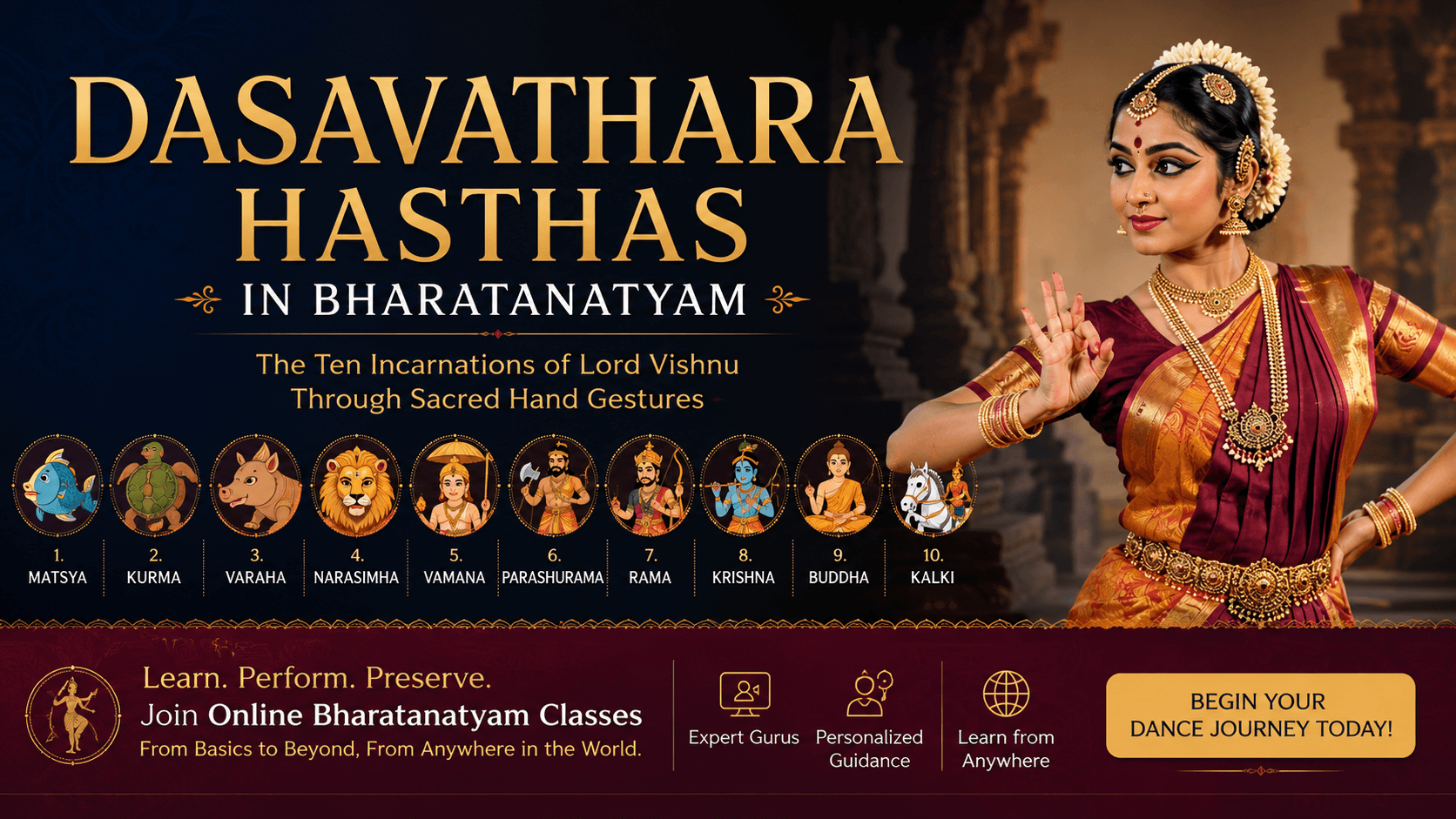
Bharatanatyam beautifully depicts the ten incarnations of Vishnu through expressive hand gestures called Hasthas. Each avatar has a spiritual meaning and a specific gesture used in dance performances.
1. Matsya Avatara
Matsya is the fish incarnation of Vishnu who saved mankind and the sacred Vedas during the great flood. This avatar symbolizes protection and guidance during difficult times.
Gesture: Both hands are held in Tripataka Hasta at shoulder level to represent the fish form and infer Lord Vishnu.
2. Kurma Avatara
Kurma, the tortoise incarnation, supported Mount Mandara during the churning of the ocean. It represents patience, strength, and stability.
Gesture: The dancer first shows Kurma Hasta, followed by both hands in Tripataka Hasta at shoulder level representing Vishnu.
3. Varaha Avatara
Varaha is the boar incarnation who rescued Mother Earth from the demon Hiranyaksha. This avatar signifies courage and protection of the world.
Gesture: Boar-like facial expressions and hand gestures are used, followed by Tripataka Hasta to symbolize Vishnu.
4. Narasimha Avatara
Narasimha, the man-lion incarnation, appeared to destroy the demon Hiranyakashipu and protect Prahlada. It represents the victory of good over evil.
Gesture: Fierce lion-like gestures, wide eyes, and claw movements are used to portray Narasimha’s powerful form.
5. Vamana Avatara
Vamana is the dwarf Brahmin incarnation who defeated King Bali through wisdom and humility. This avatar teaches that intelligence is greater than pride.
Gesture: Mushti Hasta is used to depict Vamana.
6. Parashurama Avatara
Parashurama is the warrior sage incarnation known for carrying an axe and destroying evil rulers. He symbolizes bravery, discipline, and justice.
Gesture: Ardapataka Hasta represents the axe of Parashurama.
7. Rama Avatara
Rama is the ideal king and hero of the Ramayana, known for truth, righteousness, and devotion.
Gesture: Shikhara Hasta is used to portray Rama holding the bow.
8. Krishna Avatara
Krishna is the divine cowherd and teacher of the Bhagavad Gita. He symbolizes love, compassion, and joy.
Gesture: Mrigashirsa Hasta is used to depict Krishna playing the flute.
9. Buddha Avatara
Gautama Buddha is considered an incarnation of Vishnu who spread the message of peace, compassion, and non-violence.
Gesture: Meditation mudras and calm hand gestures are used to represent enlightenment and serenity.
10. Kalki Avatara
Kalki is believed to be the future incarnation of Vishnu who will appear to destroy evil and restore righteousness in the world.
Gesture: The right hand is shown in Pataka Hasta and the left hand in Tripataka Hasta, symbolizing the warrior form of Kalki.
Dasavathara Hasthas are an important aspect of Bharatanatyam storytelling. Through graceful movements, symbolic gestures, and expressions, dancers bring the divine incarnations of Vishnu to life while conveying moral and spiritual values to the audience.